Disclosure: This post contains affiliate links. As an Amazon Associate I earn from qualifying purchases. See our disclosure policy for details.
Why weeds show up in a dormant Southeast lawn
Walk a Georgia, Carolina, or Alabama yard in January and the picture is the same: brown bermudagrass, zoysia, centipede, or St. Augustine, with bright green weeds standing out against it. Warm-season turf goes dormant when soil cools. Chickweed, wild violet, dandelion, wild onion, and poa annua keep growing through the mild Southeast winter and grab the light, water, and space your grass is not using.
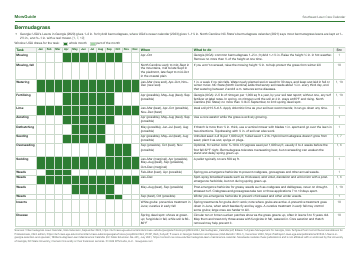
Printable full-year calendar
Print the full-year Southeast schedule
It covers watering, feeding, weeds, insects, disease, aerating, and overseeding, month by month for each grass. Drawn from Southeast extension publications. The bundle includes the planning worksheet.
Tall fescue is the exception in the upper Southeast. It stays green and active in winter, so a fescue lawn is not dormant the way a bermuda lawn is. Weed timing on fescue still follows the cool-season calendar, not the warm-season one. For the full regional sequence by grass type, the Southeast lawn care guide walks month-by-month care for bermuda, zoysia, centipede, St. Augustine, and tall fescue across the region.
The weeds you see now either germinated last fall before a winter pre-emergent went down, or they are perennials that never fully shut off. The Southeast fall lawn calendar covers the September through November moves that stop most of this. If that window closed without a pre-emergent, this post is about what you can still do in December through February, and what has to wait. Pair it with the Southeast mowing hub for height and seasonal cut notes that keep turf dense enough to crowd weeds out once spring green-up starts.
Broadleaf weeds you can spot-treat now
Chickweed, wild violet, dandelion, and wild onion are the broadleaves UGA lists for winter spot work on Southeast lawns. On bermudagrass, zoysiagrass, and centipedegrass, Extension calendars allow post-emergence spot sprays for these weeds any month of the year, with one hard stop: do not spray during spring green-up. Green-up is when the turf is thin, soft, and most likely to take herbicide injury. Tall fescue also gets January through December post-emergence spot sprays on chickweed, dandelion, and wild onion; its calendar row does not add a green-up pause.
That means January and February are workable months for spot treatment on those grasses, as long as the weeds are actively growing and daytime temperatures support product performance per the label. A blanket January weed-and-feed across the whole yard is the wrong move. Spot the clumps you can see, leave the dormant turf alone, and read the product label for turf-type restrictions before you open the bag.
St. Augustine has a tighter window. UGA lists spot sprays for the same broadleaves in January and February, then again May through December, and calls out injury risk from 2,4-D and MCPA, above all during green-up. If your lawn is St. Augustine, treat the grass-specific section below as required reading before you buy anything.
A granular broadleaf killer sized for home lawns fits the spot job when the label matches your grass:
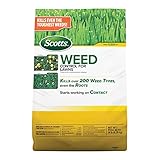
Scotts Weed Control for Lawns is labeled for dandelion, clover, chickweed, and more than 200 listed broadleaves, with coverage up to 5,000 sq. ft. per bag. The listing says to apply when broadleaf weeds are actively growing in spring or early fall, and it excludes Dichondra, carpetgrass, Floratam St. Augustine, creeping bentgrass, and turf where you want clover. Match the bag to your grass, follow the label rates and timing, and check your state Extension office if you are unsure which active ingredients your turf type tolerates. Do not treat this as a whole-lawn winter feed.
Hand-pulling still works on small wild onion clumps and isolated dandelions when soil is moist. For scattered chickweed in dormant bermuda, a careful spot spray beats tearing up crowns you will need in April.
Poa annua and grassy winter weeds
There is no reliable selective post-emergent protocol for poa annua once it is up in a dormant warm-season Southeast lawn. If annual bluegrass is already flowering in your bermuda, zoysia, centipede, or St. Augustine this winter, the honest answer is that you are mostly managing appearance until spring transition, not erasing it with a single spray.
Poa annua germinates in fall as soil cools. UGA’s bermudagrass, zoysia, centipede, and St. Augustine calendars put the winter pre-emergence window at September (best) and October (possible) to stop chickweed and other winter weeds before they start. Miss that window and the plants you see in January are already established. Mowing them short, avoiding heavy nitrogen that feeds the weed more than the dormant turf, and waiting for warm-season green-up to outcompete thinning patches is the practical mid-winter path.
Do not invent a catch-up pre-emergent in December or January. The Extension rows that cover these grasses do not support a mid-winter pre-emergent application for poa that is already up. The prevention play lives on the fall side of the calendar: fall pre-emergent timing to stop poa annua and winter weeds before they start is the page for September and October product and soil-temp decisions. Bookmark it for next year rather than forcing a product now.
On bermudagrass and zoysiagrass, post-emergence grassy-weed herbicides target summer weeds such as crabgrass and dallisgrass in the May through August window (September possible), never on drought-stressed turf, and often need two or three applications, spaced 7 to 10 days apart on bermuda. That is a summer job, not a January one. St. Augustine calendars in this set do not list a summer post-emergence grassy-weed window. Wild onion is handled as a broadleaf spot spray under the winter rules above, not as a grassy-weed product.
If you overseeded warm-season turf with ryegrass for winter color, keep herbicide choices off that stand unless the label explicitly allows the overseeded grass. Killing the nurse crop to chase poa is a net loss in most home lawns.
Grass-specific cautions
St. Augustinegrass. Spot-spray broadleaves such as chickweed, wild violet, dandelion, and wild onion in January and February, then again May through December. UGA states that herbicides such as 2,4-D and MCPA injure St. Augustinegrass, above all during green-up. Read every label for St. Augustine (including Floratam) restrictions before you spray. When the bag is silent or lists your variety as excluded, skip it and ask your county Extension office for a St. Augustine-safe option.
Bermudagrass and zoysiagrass. Broadleaf spot sprays run January through December outside spring green-up. Zoysia can be sensitive to some summer grassy-weed products; that caution matters more in May through August than in winter, but it is a reason to stay label-directed year-round. Winter pre-emergent for next season still lands in September (best) or October (possible).
Centipedegrass. Same January through December broadleaf spot rule, not during green-up. Centipede is a lean, low-input grass; heavy winter fertilizer paired with a weed product is the wrong stack. In the summer grassy-weed window, Clemson names sethoxydim for crabgrass, goosegrass, and sandspurs on centipede. For winter broadleaves, stick to products the label clears for centipede and confirm with Extension if the turf is thin or recently established.
Tall fescue. Fescue stays active in winter in the upper Southeast, so it is not a dormant brown canvas. UGA allows January through December post-emergence spot sprays on broadleaves such as chickweed, dandelion, and wild onion. Spring pre-emergent timing still matters for crabgrass; see the next section. If you plan to seed, interseed, or sod within three to four months, skip a winter pre-emergent that would interfere with establishment.
On every grass type, the product label and your state Extension turf guidance decide what you put down. Rates, surfactants, and re-entry intervals live on the label, not in a blog post.
Mark your February–March window
The next control window that Extension actually schedules is spring pre-emergence for crabgrass, goosegrass, and other summer annuals. Across bermudagrass, zoysia, centipede, St. Augustine, and tall fescue, UGA lists February through March as best and April as possible.
Regional color from the same source set:
- NC State times zoysia spring pre-emergent mid-February to early March in North Carolina.
- Clemson times centipede about mid-February on the South Carolina coast and central areas, and mid-March in the piedmont and mountains, with a second application 8 to 10 weeks later.
- NC State notes mid to late February for St. Augustine where crabgrass and goosegrass have been a problem.
- Clemson keys tall fescue spring pre-emergent in South Carolina to forsythia or dogwood bloom.
That window is ahead of you in December and January. Buy the product now if you want it on the shelf, but do not put spring crabgrass preventer down in the middle of winter. Apply when your local timing hits, water in per the label, and keep a second application on the calendar if your Extension source calls for one.
A season-long crabgrass preventer to stage for that February–March application:

Scotts Halts Crabgrass & Grassy Weed Preventer covers up to 5,000 sq. ft., prevents crabgrass with a spring application, and the listing also notes fall use against winter weeds such as poa annua, henbit, and chickweed. For this post’s job, treat it as a buy-ahead for the February–March crabgrass window, not as a December spray. Follow the label for your grass type, and confirm timing with your county Extension office if soil temperatures or bloom cues in your county run earlier or later than the state averages above.
Once spring pre-emergent is down and warm-season turf starts greening, hold broadleaf spot sprays until green-up finishes. That is the same green-up pause the winter calendars already flag for bermuda, zoysia, and centipede. Dense turf at the right mowing height after green-up does more long-term weed control than any single winter product.