Disclosure: This post contains affiliate links. As an Amazon Associate I earn from qualifying purchases. See our disclosure policy for details.
Why the brown strip shows up every March
The ice melt you toss on a walkway does not stay on the walkway. Meltwater carries dissolved salt onto the first two or three feet of turf, and that is where Mid-Atlantic tall fescue and Kentucky bluegrass show salt damage to lawn by late winter: a bleached, crunchy band along the sidewalk. If you want ice melt safe for grass, the ingredient list on the bag matters more than the color of the pellets.
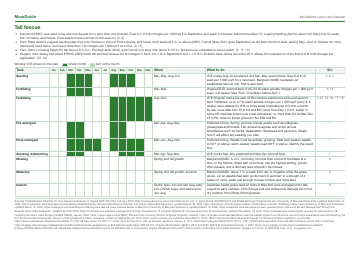
Printable full-year calendar
Print the full-year Mid-Atlantic schedule
It covers watering, feeding, weeds, insects, disease, aerating, and overseeding, month by month for each grass. Drawn from Mid-Atlantic extension publications. The bundle includes the planning worksheet.
Year-round mowing height and watering for this region’s grasses are in the Mid-Atlantic lawn care guide. That guide is for the growing season. This page is the winter strip along the walk.
Most home lawns from northern Virginia through Maryland, Delaware, southeastern Pennsylvania, and New Jersey are tall fescue. Kentucky bluegrass shows up in older mixes, and perennial ryegrass in overseeded spots. The Mid-Atlantic mowing guide covers height and timing once growth resumes. Until then, the job is to keep deicer off the turf you still want in April.
Tall fescue in this region stays dull green in winter. A straw band only along the pavement is salt burn, not winter color. Meltwater follows grade, so the downhill side of a walk and any low corner where brine ponds overnight will show the worst kill.
Freeze-thaw weeks from northern Virginia through Philadelphia mean the same walk gets treated again and again. The grass along the edge often looks passable in January and then collapses in February, after the third or fourth melt. That is accumulated salt, not one storm.
Ice melt safe for grass: what each ingredient does to turf
Sodium chloride, the rock salt in most store-brand bags, is the main driver of salt damage to lawn along Mid-Atlantic walks. It pulls water out of grass crowns. It also leaves sodium in the soil. On the clay-heavy ground common through much of this region, that sodium can disperse clay particles so the strip seals up and sheds water instead of taking it in.
Magnesium chloride still carries chloride, so it is not harmless to turf. It is milder than sodium chloride, and it attracts moisture from the air, so it keeps working in colder weather. That also means more brine running onto the lawn if you pour it on.
Calcium magnesium acetate, sold as CMA, does not add sodium. That is why it shows up in products aimed at grass and concrete. It also loses punch in extreme cold, so the temptation is to put down extra. Extra product is still extra chemistry in the drip line.
A chloride-free formula (acetates and amide cores, no salt) is the one that belongs next to turf if you are shopping for ice melt safe for grass. It will not match rock salt on melt speed. That slower melt is what keeps a brine film from sitting on the same three feet of fescue all night.
Penn State Extension advises keeping deicing salt off turf and flushing the edge in spring once the ground can take water. University turf programs in this region generally rank tall fescue as more salt-tolerant than Kentucky bluegrass. Read that as a tendency. A heavy dose will brown either grass.
Using less product, and keeping granules on the pavement, cuts how much salt reaches the grass. Sweep leftover pellets off the turf after the walk is clear.
Pet safe ice melt along the lawn edge
‘Pet safe’ is not a tightly regulated claim. Read the chemistry, then decide whether that chemistry also keeps chloride off the grass. The products below are chosen for what they do to turf, not for how fast they clear a walk.
A salt-free deicer is the strongest match next to turf. Safe Paw Pet Safe Ice Melt uses calcium magnesium acetate with a crystalline amide core and is 100 percent free of salt and chloride. It does not burn grass and garden beds the way traditional rock salt does.
Where you still want a chloride salt, pure magnesium chloride is the mid-tier pick. FIREKI Ice Melt has no additives and no coloring, and it is non-corrosive and safe for pet paws and concrete. Apply it at the start of a snowfall so you use less. Less product is what protects the lawn.
A CMA pellet mix is the third option, with a caveat. Snow Joe Snow & Ice Melter combines calcium magnesium acetate with sodium chloride and a fertilizer blend, so it is not a salt-free choice. Nitrogen on dormant turf in January does not help salt-stressed crowns. The green coating shows where you already spread, which helps you stop before the granules sit on the grass.
Keep the same label habit you use for pet-safe lawn care products during the growing season.
Repair the salted strip once the ground thaws
When daytime temperatures stay above freezing and the soil can absorb water, soak the brown band. Do not run a sprinkler on frozen ground to wash salt off. The water ices, you add more deicer, and the soil cannot move salt until it thaws. Several slow passes with a hose, two or three times over a week, move sodium and chloride down and out of the root zone. One hard flood sheets off the surface and wastes the effort.
A white crust on the soil in March is leftover salt. Brush it off, then flush.
On that salted strip, especially where the soil is clay, gypsum (calcium sulfate) is the amendment Penn State Extension discusses for sodium-affected soil. Calcium can help displace sodium so rain or irrigation can leach it. That advice applies to the salted strip, not the whole yard. Gypsum does little on soil that never took a salt load.
Once the band dries, rake out the dead, matted leaf so water and gypsum can reach the soil. Leave any crown that still has a green center. Those plants can fill if the salt load drops.
Do not seed into a crusted, salty band in February. Wait until the soil is workable in spring, then patch with a turf-type tall fescue blend, not a ryegrass-heavy sun-and-shade mix that will thin by July. Small dead patches follow the same steps as any other bare spot; how to fix bare spots in a lawn walks through that repair. A long, repeating walkway edge is a fall job. Tall fescue establishes in this region in the fall overseeding window, and that sequence is in the Mid-Atlantic fall overseeding and aeration playbook.
Hold fertilizer until the grass is growing. Salt-stressed crowns do not need nitrogen in March. At the first spring mow, keep tall fescue at 3 to 4 inches, the range Penn State Extension gives for this grass. Cutting the damaged edge short removes the leaf it still has to grow on.
Keep salted snow off the same three feet of turf when you can. A winter of piled, salty snow is how a light application becomes a heavy one.