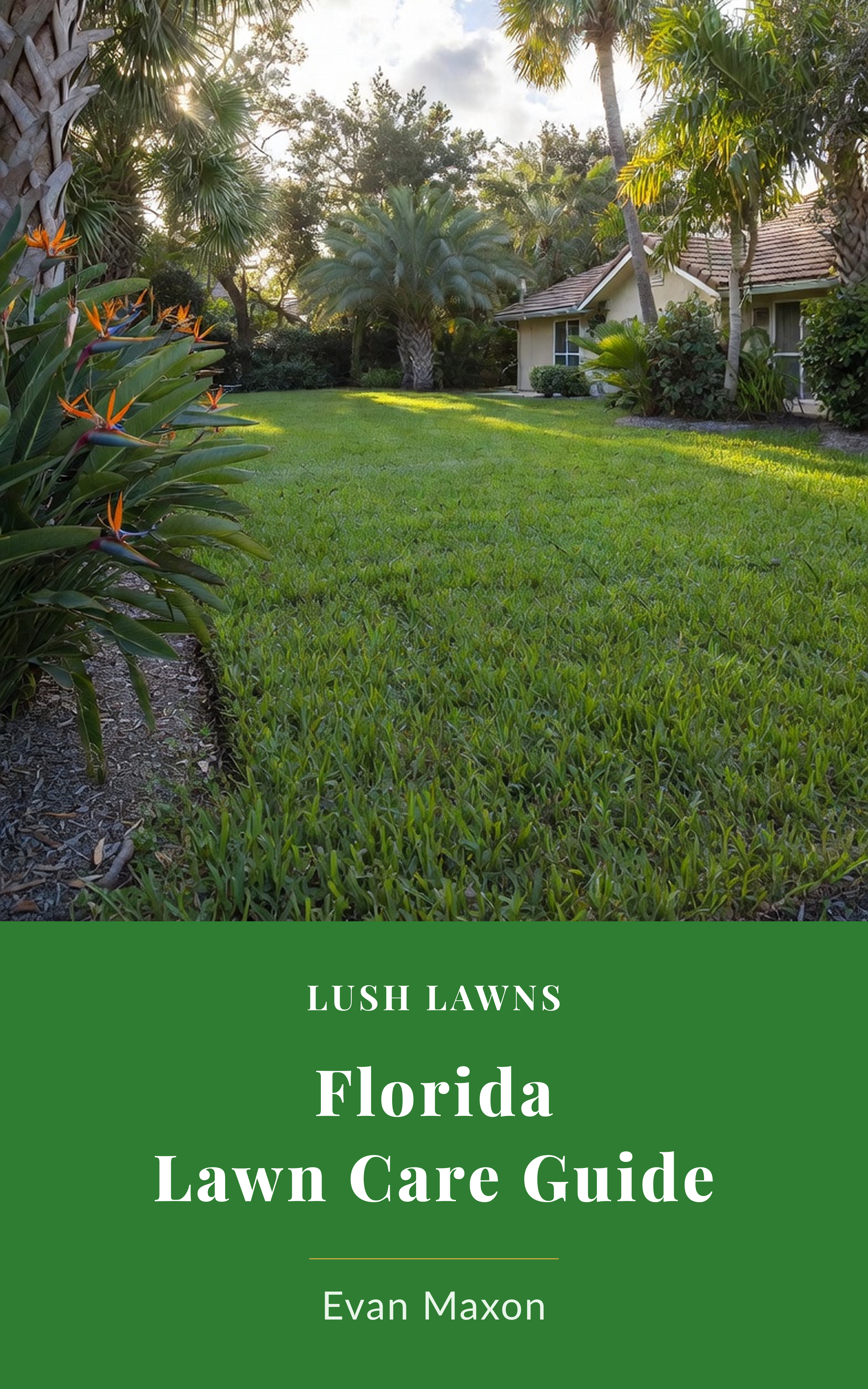
- St. Augustine wants a high cut (3.5–4 in) — scalping it invites weeds and chinch bugs
- A year-round mowing calendar (Florida lawns never go fully dormant)
- Bahia for low-input, unirrigated yards; Centipede for acidic, sandy soils
- Chinch bugs, summer downpours, and sandy-soil watering — handled by season
Florida lawns never go dormant — you mow twelve months a year, and the mistakes are different from anywhere else in the country. The state’s dominant grass, St. Augustine, wants a high cut (3.5–4 inches); scalp it and you invite weeds and the chinch bugs that plague Florida yards every summer. Bahia is the tough, low-input choice for unirrigated lots, and Centipede is the slow-growing option for acidic, sandy soils that resents being cut short or over-fertilized.
Lush Lawns Florida is the region-specific playbook for the subtropics — from the Panhandle down through Central Florida to the year-round growing season of the south. It covers the three grasses that actually thrive here, the mowing heights each one needs, and the watering and pest timing built around Florida’s wet summers and sandy soil.
It’s for the Florida homeowner who’s tired of generic advice that assumes a winter. Pair it with MowGuide’s Florida mowing guide for the quick height chart, then use the book for the full season-by-season plan.
What's inside
- Florida's growing regions: How the Panhandle, Central Florida, and South Florida differ for lawn care.
- Choosing your grass: St. Augustine, Bahia, and Centipede — telling them apart and the height each wants.
- The year-round mowing calendar: Mowing through Florida's wet and dry seasons, with no true winter dormancy.
- Water and soil: Watering sandy soils efficiently and surviving summer rain.
- Chinch bugs, weeds, and disease: The pests and fungal issues that target Florida lawns, and how to time control.
Get the Florida guide. Year-round lawn care for Florida — St. Augustine, Bahia, and Centipede, with mowing heights and seasonal timing for the subtropical climate.
Buy on Amazon →